

Japan’s Luxury Home Evolution
For centuries, Japanese homes celebrated nature, simplicity, and craftsmanship, seen in tatami mats, shoji screens, and minimalist gardens. After the war, Western styles and modern amenities became popular, leading to concrete construction and larger spaces. Now, homes are becoming technologically sophisticated.
Japan's ultra-luxury real estate is transforming, with high demand for tech-equipped mansions. This shift rethinks how homes function, driven by Japan's aging population, seismic activity, and limited land.
These challenges accelerate smart home adoption. Automation assists the aging population. Smart tech aids seismic monitoring and robust materials. Efficient space use is enabled by smart systems optimizing energy and resources.
The Rise of the ‘Domotics Estate’
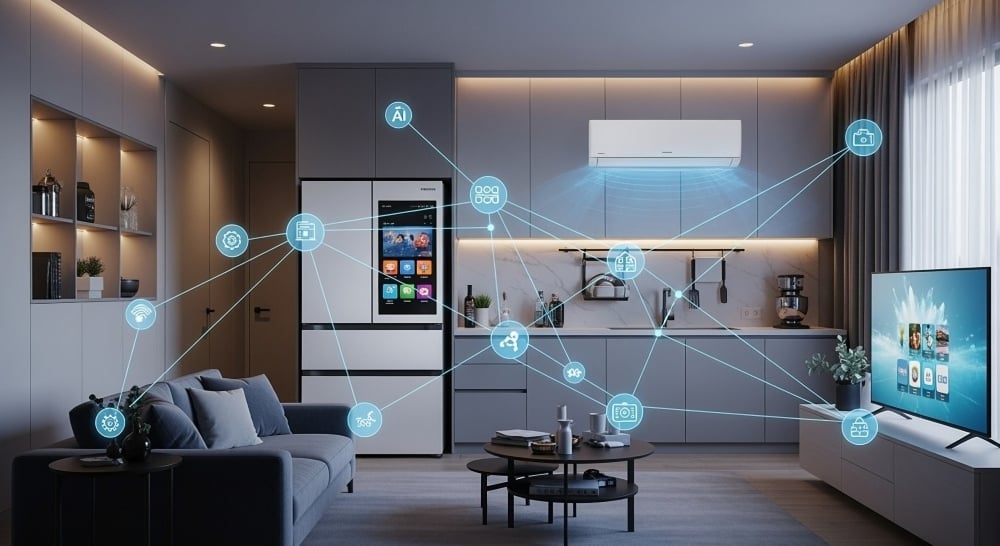
The 'domotics estate' is emerging: a fully integrated home where AI and automation manage temperature, lighting, security, and entertainment. It's a cohesive system that anticipates needs, not just a collection of smart devices. The term 'domotics' (home + robotics) fits well in Japan.
Several factors fuel this trend. Japan's tech-savvy population readily adopts new technologies for simpler lives. A cultural emphasis on convenience and efficiency aligns with smart homes. Addressing the needs of an aging society, including support and safety for the elderly, is also a major driver.
Voice assistants like Google Assistant and Amazon Alexa show this shift. However, the domotics estate goes beyond voice control. It's a home that learns habits, understands preferences, and adapts to needs without constant input, offering seamless integration and intuitive function.
Core Technologies: Beyond Voice Control
While voice-activated lighting and smart thermostats are common, AI systems in Japanese luxury homes are more sophisticated. Predictive energy management analyzes usage data, weather, and occupancy to optimize energy consumption, reducing bills and environmental impact.
Advanced security systems are a major focus. Facial recognition provides secure access, replacing keys. Drone monitoring offers surveillance, and AI threat detection identifies potential breaches. These systems are proactive, learning normal activity and flagging anomalies.
Automated maintenance is another innovation. Predictive maintenance algorithms analyze sensor data to identify potential equipment failures for proactive repairs. Robotic cleaners handle routine tasks, freeing residents. Personalized environmental controls, like air purification and humidity regulation, create a comfortable, healthy environment.
These features address real-world concerns about energy efficiency, security, and home maintenance in seismic regions. They are becoming essential for discerning homeowners.
Security & Peace of Mind
Japan faces security challenges, including awareness of natural disasters and the need for robust protection. AI security systems offer sophisticated features. Facial recognition access control is standard, allowing only authorized entry. Some systems can even detect emotional states to identify suspicious behavior.
Drone surveillance provides a view of the property, detecting intruders or hazards. AI threat detection systems analyze video feeds, identifying and alerting security to unusual activity. This is a significant upgrade from traditional systems. It's unclear if current systems can reliably differentiate between a delivery person and an intruder in all scenarios, a key area for development.
The increasing use of AI in security raises data privacy concerns. Developers are addressing this with encryption, data anonymization, and user control over personal information. Transparency and responsible data handling are paramount to providing peace of mind without compromising privacy.
Wellness Integrated: Health-Conscious Homes
AI enhances home wellness, aligning with Japan's focus on preventative healthcare. Air quality monitoring and purification systems are standard, removing pollutants for a healthier indoor environment. Personalized lighting systems regulate circadian rhythms, promoting better sleep and mood.
Automated aromatherapy systems diffuse essential oils to create a tailored atmosphere. Smart bathrooms analyze health metrics like weight and body composition, providing insights into overall health. This data can integrate with wearable trackers for a comprehensive picture.
These features create a home that actively supports occupant health and well-being, reflecting Japanese values of balance and harmony. Integration with wearable devices allows continuous monitoring and personalized recommendations.
The Cost of the Connected Estate
Building an AI-powered smart mansion in Japan represents a significant financial investment. The initial costs – including hardware, software, installation, and custom integration – can easily reach into the millions of dollars. Ongoing maintenance fees, software updates, and potential repairs also need to be factored into the budget. These are ultra-luxury properties, and the price reflects that.
Comparing the costs to traditional luxury homes is complex. While the initial investment is higher, the long-term value proposition can be compelling. Potential energy savings, reduced maintenance costs, and increased security can offset some of the initial expenses. However, it’s crucial to be realistic about the price point and understand that these systems require ongoing maintenance and updates.
The value isn’t just monetary. The convenience, security, and enhanced quality of life offered by a domotics estate are significant benefits that appeal to a discerning clientele. It’s an investment in a lifestyle, as much as it is in a property. And as the technology matures and becomes more accessible, we can expect to see the costs gradually decrease.
Leading Developers & Innovations
Several Japanese developers are at the forefront of AI-powered smart home technology. One notable example is IQ Corporation, known for integrating robotics into home maintenance and security. They’ve developed a robotic system that can perform tasks like window cleaning and lawn mowing, freeing up residents from these chores. Another company, Sanshin Corporation, specializes in energy management systems that optimize energy consumption based on real-time data.
Kajima Corporation is experimenting with AI-driven design elements, using algorithms to optimize floor plans and maximize natural light. They're also developing smart building materials that can adapt to changing environmental conditions. These companies aren’t just integrating existing technologies; they’re actively innovating and pushing the boundaries of what’s possible.
While specific project details are often confidential, the common thread among these developers is a commitment to creating homes that are not only luxurious but also intelligent, sustainable, and responsive to the needs of their occupants. They are demonstrating that the future of luxury real estate in Japan is inextricably linked to the power of artificial intelligence.
Japanese Smart Home Developers
- Sekisui Heim - Sekisui Heim is a major Japanese housing corporation known for its prefabricated homes and increasing integration of smart home technology. They focus on energy efficiency and disaster resilience, incorporating systems for automated lighting, HVAC control, and security.
- Panasonic Homes - A division of the electronics giant, Panasonic Homes leverages Panasonic’s technology expertise to create highly integrated smart homes. Their systems often include advanced security features, energy management, and home entertainment options. They are known for their 'Connect Home' platform.
- LIXIL Corporation - LIXIL, formed from the merger of several Japanese housing and building materials companies, offers a broad range of smart home solutions under brands like INAX and Tostem. They focus on creating comfortable and convenient living spaces with features like automated shades, smart toilets, and integrated security systems.
- Daiwa House Industry - Daiwa House is one of Japan's largest homebuilders, and they are actively incorporating smart home technology into their high-end residential projects. They emphasize creating homes that adapt to the needs of their occupants, with features like voice control, remote monitoring, and automated energy management.
- Mitsubishi Estate Home - As part of the Mitsubishi Estate Group, this company focuses on luxury housing and is integrating smart home technologies to enhance comfort, security, and convenience. They often include features like smart lighting, climate control, and integrated entertainment systems in their properties.
- Asahi Kasei Homes - Asahi Kasei Homes focuses on creating healthy and comfortable living environments. They are integrating smart home technologies to monitor air quality, optimize energy usage, and provide enhanced security features, catering to a growing demand for wellness-focused homes.
- Sumitomo Forestry Home Tech - Sumitomo Forestry Home Tech, part of the larger Sumitomo Forestry group, specializes in timber-frame construction and is increasingly incorporating smart home technologies to enhance the sustainability and functionality of their homes. They focus on energy efficiency and creating a harmonious living environment.
Looking Ahead: 2026 and Beyond
By 2026, we can expect to see even more sophisticated AI integration in Japanese smart homes. Holographic interfaces may become commonplace, allowing residents to interact with their homes in a more intuitive and immersive way. Personalized AI assistants will anticipate needs before homeowners even realize them, proactively adjusting settings and providing recommendations.
Fully automated home management systems will handle everything from grocery shopping and meal planning to scheduling appointments and managing finances. The line between the physical and digital worlds will continue to blur, creating a seamless and interconnected living experience. This level of automation raises important ethical considerations, particularly regarding data security and privacy.
Ensuring that these systems are secure and that user data is protected will be paramount. We’ll also need to address the potential for algorithmic bias and ensure that AI systems are fair and equitable. The biggest change, I believe, will be the shift from reactive to proactive AI – a home that doesn’t just respond to your commands but anticipates your needs and enhances your life in subtle, yet meaningful ways. The future of Japanese luxury homes is undeniably intelligent.

No comments yet. Be the first to share your thoughts!