

The Billionaire Bunker: AI's Rise in Luxury Homes
Tech billionaires are building future-forward homes with artificial intelligence as a core component. This moves beyond aesthetics to demand a proactive, secure, and highly personalized living environment. It’s about a home that anticipates needs, not just remote-controlled lights.
The concept of a smart home isn't new. Early automation systems in the 1930s, like those in Sears Modern Homes catalogs, offered basic conveniences. Today's AI-driven systems, however, learn and adapt, a significant leap from programming simple action sequences.
The shift is driven by a desire for privacy and control. AI offers security and personalization, creating a sanctuary where technology enhances life without intrusion.
Seamless integration is key. Homeowners want devices to work together harmoniously, requiring sophisticated AI that understands context, predicts behavior, and responds appropriately.
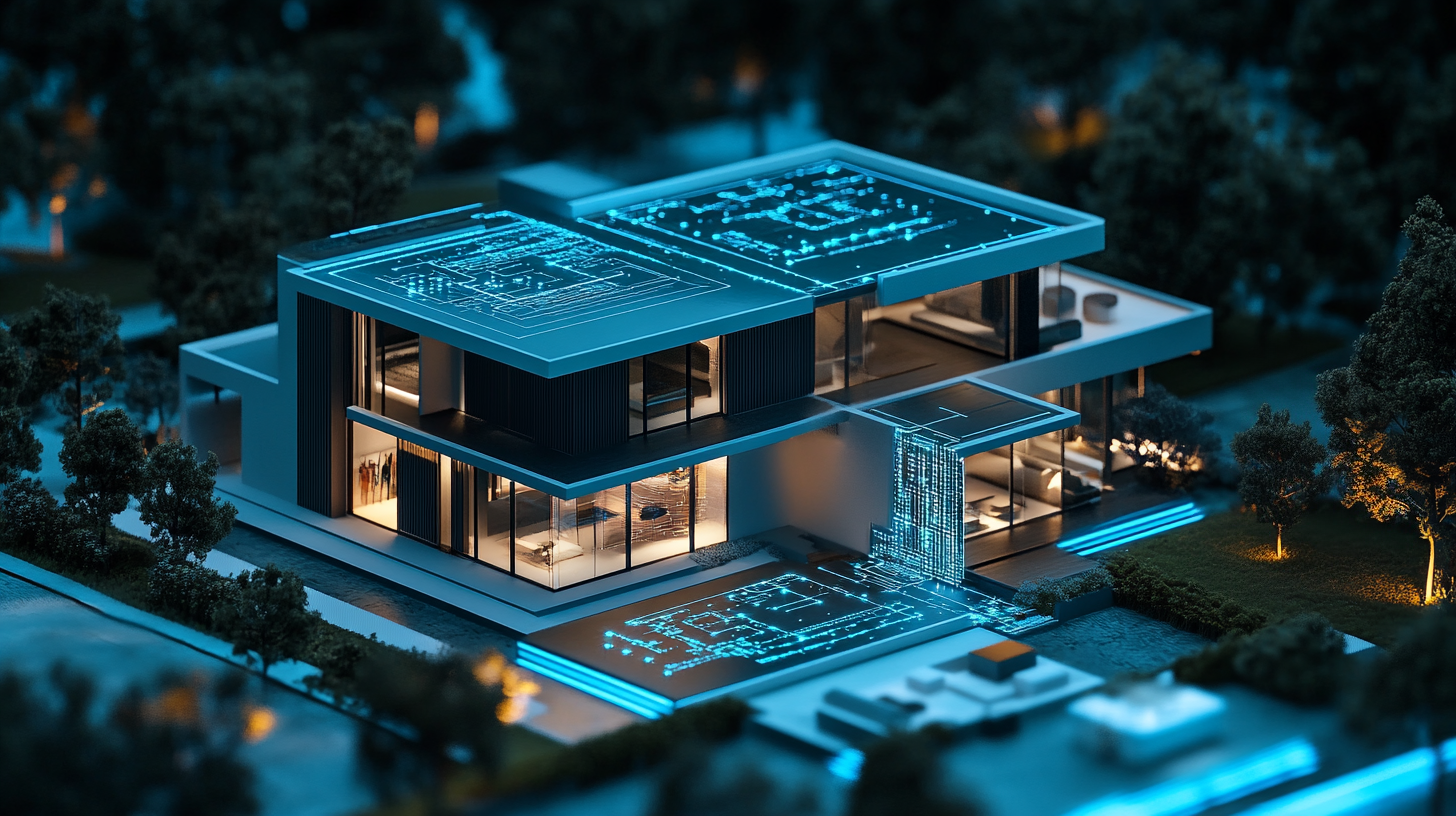
Beyond Voice Control: The Layers of AI Integration
AI in these mansions manages energy consumption and security protocols. AI-powered energy management systems learn user habits to optimize electricity use and temperature preferences, leading to cost savings.
Predictive maintenance uses AI algorithms to analyze appliance and system data, identifying potential failures before they occur. This reduces unexpected breakdowns and repair costs, like an HVAC system alerting you to a minor issue before it becomes major.
AI-powered surveillance systems distinguish between family, delivery personnel, and intruders, detecting unusual activity and alerting security. Edge computing processes data locally, reducing latency and enhancing privacy, a significant improvement over traditional security cameras.
Edge computing's benefit lies in on-site data processing, minimizing data breach risks and ensuring faster response times, crucial for security systems.
Personalization at Scale: The AI Butler Effect
AI personalizes lighting, temperature, entertainment, and scent diffusion, creating a home that anticipates needs like a dedicated butler. For example, entering a room could automatically adjust lighting, play music, and diffuse a preferred scent.
Facial recognition uses biometric data to identify individuals and adjust settings, creating a personalized experience. Homeowners are cautious about data collection and usage due to privacy concerns.
AI learns routines, such as wake-up times, exercise preferences, and relaxation periods, to adjust the environment for optimal comfort and productivity, creating an intuitive home.
Integrators report that managing user expectations is the main challenge, as users expect AI to be perfect immediately, while systems require time to learn and adapt through refinement.
- Personalized lighting and temperature
- Automated entertainment systems
- Scent diffusion based on mood or preference
- Biometric data-driven adjustments
Security Reimagined: AI as the Ultimate Gatekeeper
AI revolutionizes home security by distinguishing between family, delivery personnel, and threats with accuracy, minimizing false alarms and ensuring alerts only when necessary.
Drone patrols offer a bird's-eye view, detecting unusual activity. They can follow pre-defined routes or respond to alerts. AI-powered perimeter monitoring systems analyze video feeds to identify potential breaches.
Integrating AI with law enforcement for automatic police alerts during security breaches presents complex privacy and misuse concerns, requiring a delicate balance.
Cybersecurity is paramount, as AI systems are vulnerable to hacking. Homeowners invest heavily in measures to protect against unauthorized access in this ongoing challenge.
The Tech Behind the Walls: Key Players & Systems
Companies like Crestron, Savant, and Control4 lead in AI-powered home automation, offering integrated systems for lighting, security, entertainment, and climate control, typically installed and maintained by certified professionals.
Open-source platforms are trending, allowing customization and integration of different technologies. This offers flexibility and avoids vendor lock-in, though it requires more technical expertise.
Systems vary between centralized (single server processing) and distributed (processing throughout the house). Distributed systems are generally more reliable and scalable but more complex to manage.
A dominant platform is unlikely due to the high level of personalization demanded by homeowners, which requires extensive custom integration work, making it more about commissioning a bespoke system than buying a product.
Leading Smart Home Platforms: A Comparison for Luxury Integration (2026 Outlook)
| Platform | Ease of Use | Customization | Security Features | System Integration |
|---|---|---|---|---|
| Crestron | Generally requires professional installation and programming; steeper learning curve for end-users. | Highly customizable, offering extensive control over all aspects of a home’s systems. Known for complex, bespoke solutions. | Robust security protocols, often incorporating encryption and access control. Integrates with professional monitoring services. | Excellent integration capabilities with a wide range of third-party devices and systems, including HVAC, lighting, and security. Often favored for large-scale, complex projects. |
| Savant | Designed with a user-friendly interface, aiming for intuitive control via mobile app and voice assistants. | Offers significant customization, though potentially less granular than Crestron. Focuses on a more streamlined, design-centric experience. | Advanced security features including user profiles, remote access control, and integration with security systems. Emphasizes privacy. | Strong integration with Apple ecosystems and other popular smart home devices. Expanding compatibility with emerging technologies. |
| Control4 | Balances professional installation with a relatively user-friendly experience. Offers a simplified programming interface for dealers. | Good level of customization, providing control over lighting, entertainment, and climate. Offers pre-configured automation scenes. | Provides security features like remote monitoring, door lock control, and alarm system integration. Relies on professional monitoring partnerships. | Broad compatibility with many devices and systems. A popular choice for whole-home automation, offering a balance of features and cost. |
| Lutron | Primarily focused on lighting and shading control; user interface is generally straightforward for these functions. | Highly customizable within its core competency of lighting and shading. Offers a wide range of dimming and control options. | Security features related to automated lighting schedules and remote control. Integrates with security systems for enhanced protection. | Integrates well with other smart home platforms, often serving as a foundational element for lighting control within a larger system. |
| Josh.ai | Voice-focused control system, designed for natural language interaction. Requires some initial setup and learning. | Customization centers around voice commands and routines. Adapts to user preferences over time through AI learning. | Security features are built around voice authentication and secure data processing. Focuses on privacy. | Integrates with a growing number of smart home devices, prioritizing compatibility with popular brands. |
| Hubitat Elevation | More DIY-friendly compared to professionally installed systems, but requires some technical aptitude. | Offers a high degree of customization through its rule engine and community-developed apps. | Local processing enhances security and privacy. Offers robust access control features. | Supports a wide range of Z-Wave, Zigbee, and IP devices, offering flexibility in device selection. |
Illustrative comparison based on the article research brief. Verify current pricing, limits, and product details in the official docs before relying on it.
The Cost of the Future: Building and Maintaining AI Mansions
Building an AI-powered smart mansion is extremely expensive, with upfront costs easily reaching millions of dollars based on home size and integration level. Costs cover technology, design, installation, and programming.
Ongoing maintenance costs are significant, including software updates, security monitoring, and hardware repairs, requiring specialized technicians for smooth operation.
Vendor lock-in is a concern, as switching systems after investment can be difficult and costly. Careful vendor selection and understanding long-term implications are important.
Running these systems incurs substantial energy costs due to servers and sensors. AI-powered energy management can help offset these by optimizing usage.
Privacy Concerns and Ethical Considerations
undefined of the risks and take steps to protect their privacy.
The ethical implications of AI-powered surveillance are also worth considering. Is it ethical to constantly monitor your home and track the movements of everyone inside? What about the potential for bias in AI algorithms? These are difficult questions with no easy answers.
Transparency is key. Homeowners should have a clear understanding of how their data is being collected, used, and protected. They should also have the ability to control their data and opt out of certain features. It’s about empowering individuals to make informed decisions.
These homeowners are generally aware of the risks and are taking steps to mitigate them. They’re investing in robust cybersecurity measures, encrypting their data, and limiting access to sensitive information. But it’s an ongoing battle.
Looking Ahead: The Evolution of the AI Mansion
The future of AI-powered homes is incredibly exciting. We can expect to see even more sophisticated AI algorithms, more seamless integration with other technologies, and a greater emphasis on personalization. Augmented reality (AR) and virtual reality (VR) will likely play a bigger role, creating immersive and interactive living experiences.
The ultimate goal is to create fully autonomous homes that can manage themselves without human intervention. Imagine a home that automatically adjusts the temperature, orders groceries, and repairs itself. It’s a vision of the future that’s closer than you might think.
Over time, these technologies will likely become more accessible to a wider range of homeowners. The cost will come down, and the complexity will be reduced. But for now, AI-powered smart mansions remain the exclusive domain of the tech elite. It will be interesting to see how this market evolves.


No comments yet. Be the first to share your thoughts!