

Resilience as a status symbol
Last year’s hurricane season delivered a stark reminder of nature’s power. Several estates along Florida’s coastline, once symbols of unimaginable wealth, sustained significant damage, prompting a reassessment of what truly constitutes luxury. It’s no longer enough to have the largest square footage or the most expensive finishes; the ultra-wealthy are now prioritizing the ability of their homes to withstand an increasingly unpredictable climate.
Building a 20,000-square-foot home is never an environmental win, but the owners are now spending heavily to protect these assets. They aren't trying to save the planet; they are trying to save their investment. The goal is making sure a $50 million house stays habitable when the weather turns.
The concept of resilience has become the new status symbol. It’s a quiet declaration of preparedness, a subtle signal that these homeowners aren’t simply displaying wealth, they’re investing in security. Daily High House has observed a distinct increase in inquiries regarding properties with robust climate-resilient features, signaling a clear demand for this new standard of luxury. This isn’t a fleeting trend; it’s a fundamental shift in priorities.
We’re seeing a move away from purely aesthetic concerns. While design remains important, it’s now secondary to functionality and durability. The emphasis is on building homes that can withstand extreme weather events, maintain essential services during emergencies, and provide a safe haven in an uncertain world. This is about building for the future, not just for today.
Hardened structures and design
The foundation of any climate-resilient mega mansion lies in its physical structure. Elevated foundations are becoming increasingly common in coastal areas, lifting the main living spaces above potential flood levels. Properties in the Hamptons and along the California coast are leading this trend, with some homes built on pilings or engineered mounds. These aren’t subtle adjustments; they’re substantial engineering projects.
Reinforced construction materials are also critical. High-performance concrete mixes, incorporating fibers and polymers, offer increased strength and durability. Steel framing, specifically designed to withstand high winds and seismic activity, is another popular choice. Sotheby’s International Realty notes a growing demand for materials that meet rigorous building codes for hurricane and earthquake zones.
Aerodynamic designs, though less visually apparent, play a significant role in mitigating wind damage. While I’m not sure about the prevalence of full wind-tunnel testing for residential properties, the principles of reducing wind resistance are being applied in roof shapes and building orientation. The goal is to minimize uplift and lateral forces during extreme wind events.
Thoughtful vegetation also contributes to resilience. Strategically planted trees can act as windbreaks, reducing the impact of storms. Drought-resistant plants minimize water usage and require less maintenance. The focus is on functional landscaping that provides protection and reduces environmental impact. It’s about working with nature, not against it.
Independent power and water
Self-sufficiency is a cornerstone of climate-resilient luxury. Solar panel installations are now standard on many mega mansions, providing a renewable source of energy. These systems are often coupled with battery storage, such as Tesla Powerwall, to ensure a continuous power supply even during grid outages. Homeowners aren't just reducing their carbon footprint; they're securing their energy independence.
On-site water purification and storage systems are also gaining popularity. These systems can filter rainwater, well water, or even greywater for non-potable uses, reducing reliance on municipal water supplies. Greywater recycling systems, which reuse water from showers and sinks for irrigation, are particularly effective in arid climates.
The concept of microgrids is emerging as a key component of climate resilience. These localized grids allow properties to operate independently of the public grid, sharing energy resources and providing backup power during emergencies. This isn't just about convenience; it’s about maintaining essential services – heating, cooling, lighting, security – when the grid goes down.
Many owners now treat battery arrays and solar setups as bragging rights. It is a shift from showing off marble foyers to showing off off-grid reliability.
Location, Location, Adaptation
Historically, beachfront properties have commanded premium prices. However, climate change is forcing a reassessment of location priorities. While the allure of ocean views remains strong, there's a growing interest in higher-elevation sites, inland areas less prone to flooding, and regions with more stable climates. It’s a pragmatic adjustment to a changing world.
We’re seeing increased demand for properties in the Mountain West – states like Montana, Wyoming, and Colorado – which are perceived as being less vulnerable to the impacts of climate change. These areas offer a combination of natural beauty, relative stability, and a sense of remoteness. Properties are being built in areas previously considered less "prime" real estate, now valued for their resilience.
Retrofitting existing properties in vulnerable locations presents a unique set of challenges. Elevating a home, reinforcing its foundation, and installing backup systems can be costly and disruptive. It often requires extensive renovations and may not be feasible for all properties. The decision to retrofit versus rebuild is a complex one.
Daily High House has noted a trend of developers acquiring properties in vulnerable coastal areas not to build on, but to preserve as natural buffers against storm surges and erosion. This proactive approach demonstrates a growing awareness of the need for long-term adaptation.
Climate-Resilient Mansion Location Comparison - 2026
| Location Type | Climate Risk | Construction Cost | Privacy & Views | Accessibility |
|---|---|---|---|---|
| Coastal | Highest - Sea Level Rise, Storm Surge | Higher - Foundation & Protective Structures | Generally Better - Ocean Views, Beach Access | Generally Better - Established Infrastructure |
| Mountain | Moderate - Wildfire, Landslides | Moderate - Terrain Challenges, Specialized Engineering | Trade-off - Views can be excellent, but privacy varies | Moderate - Can be remote, requiring significant access development |
| Inland | Lowest - Less Exposure to Coastal & Wildfire | Moderate - Standard Construction, Potential for Flood Mitigation | Trade-off - Views often less dramatic, privacy dependent on land size | Better - Proximity to urban centers & services |
| Coastal (Elevated) | Reduced - Elevated Foundation, Protective Barriers | Very High - Significant Engineering & Materials | Excellent - Unobstructed Views, Exclusive Access | Moderate - Dependent on location, potential for access limitations |
| Mountain (Defensible Space) | Reduced - Strategic Landscaping, Fire-Resistant Materials | Higher - Specialized Construction, Land Management | Better - Natural Barriers, Seclusion | Lower - Remote Locations, Limited Services |
| Inland (Floodplain Avoidance) | Lowest - Site Selection Away From Flood Zones | Moderate - Standard Construction, Drainage Systems | Trade-off - Privacy dependent on land size, views can vary | Better - Easy Access to Amenities |
Qualitative comparison based on the article research brief. Confirm current product details in the official docs before making implementation choices.
Smart defense systems
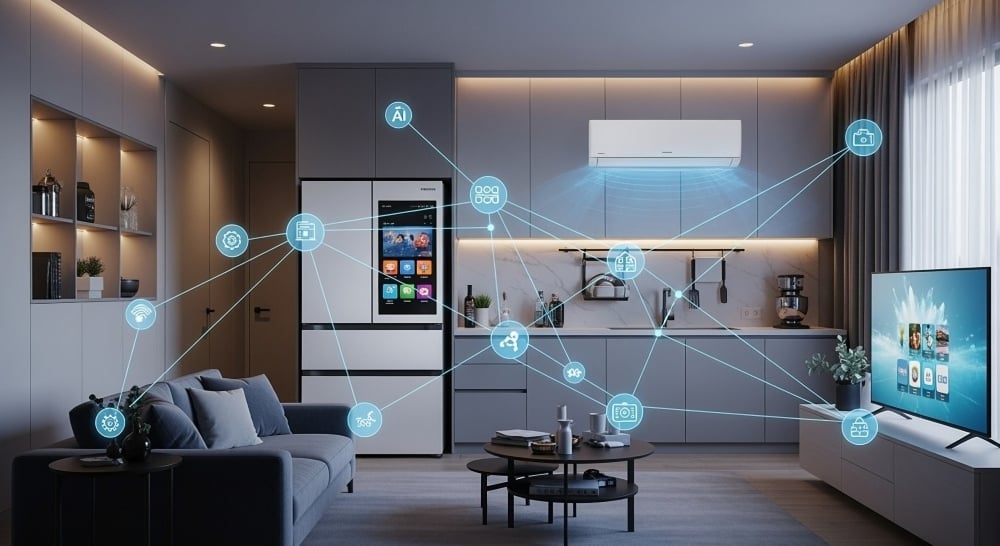
Smart systems now handle more than just lighting. Automated shutters close when barometric pressure drops, and fire suppression systems use thermal sensors to catch hot spots before they spread. Most of this runs through a single interface.
Real-time weather monitoring systems provide homeowners with up-to-the-minute information about approaching storms and other weather events. These systems can trigger automated responses, such as closing storm shutters or activating backup generators. Security systems designed to withstand power outages ensure continued protection even during emergencies.
Sensors are being used to detect leaks, structural stress, and other potential problems. These sensors can alert homeowners to issues before they escalate, allowing for timely repairs and preventing costly damage. This proactive approach to maintenance is essential for long-term resilience.
The level of automation varies depending on the homeowner’s preferences and budget. Some systems are fully automated, while others require manual intervention. However, the common goal is to create a home that is responsive, adaptable, and capable of protecting its occupants from the impacts of climate change.
The price of security
Investing in climate resilience comes at a cost. The additional expenses associated with climate-resilient construction can be substantial, encompassing materials, engineering, and technology. Reinforced concrete, steel framing, and high-performance windows all add to the initial construction cost.
Building new with climate resilience in mind is generally more cost-effective than retrofitting an existing property. Retrofitting often requires extensive renovations and may not be able to achieve the same level of protection. The cost of retrofitting can vary widely depending on the age and condition of the property.
Sotheby’s International Realty estimates that adding climate-resilient features to a luxury home can increase the overall cost by 10-25%, depending on the scope of the project. This includes the cost of design, materials, labor, and ongoing maintenance. It’s a significant investment, but one that many homeowners are willing to make.
The long-term benefits of climate resilience – reduced insurance costs, increased property value, and peace of mind – can outweigh the initial investment. It’s about protecting a valuable asset and ensuring its viability for years to come.
No comments yet. Be the first to share your thoughts!